The system behind every military enlistment in the country.
MIRS, the MEPCOM Integrated Resource System, is the software that tracks every person who joins the United States military. Aptitude tests, medical exams, background checks, pre-enlistment interviews, and contracting paperwork. All of it flows through MIRS, at 65 Military Entrance Processing Stations across the country, every day.
The version we replaced had been running since the mid-1990s. It was built for a different era: batch-synced data, custom keyboard shortcuts, frequent crashes, and a training manual that ran over 200 pages. Field advisors, the people who actually process applicants, had adapted to its quirks over decades. But "adapted" isn't the same as "effective."
Over three years, our team led the complete redesign and rebuild: front-end UI, back-end systems, and 11 integrations spanning all six branches of the armed services plus external HR and medical organizations. The result is MIRS 1.1, a modern platform that cut onboarding time from months to days and now processes millions of applicants annually.
A system from the Clinton administration, still processing recruits in 2021.
When we started this engagement, MIRS had been in production for over 25 years. That's not a typo. The system processing every military enlistment in the country was older than many of the people enlisting. And it showed.
Data entered at one MEPS location didn't reach the others until overnight batch sync completed. If a recruiter in San Antonio updated an applicant's record at 2 p.m., the processing station in Chicago wouldn't see it until the next morning. The system crashed often enough that field advisors had workarounds for the workarounds. New employees faced a 200-page training manual and months of ramp-up time just to learn the keyboard shortcuts and quirks.
There had been efforts to modernize over the years. None stuck. The system's architecture, built on text-file integrations with no real API layer, made incremental improvement nearly impossible. MEPCOM needed a full overhaul: new UI, new back-end, new integrations, and new everything. And it had to work on day one, because the military doesn't stop processing recruits while you rebuild the software.
Three years building. Seven years supporting and growing. Zero downtime.
We didn't just rebuild the software. We changed how MEPCOM thinks about software development. The engagement started with deep research, moved through iterative delivery, and ended with a platform that field advisors genuinely prefer to use.
User research across the country
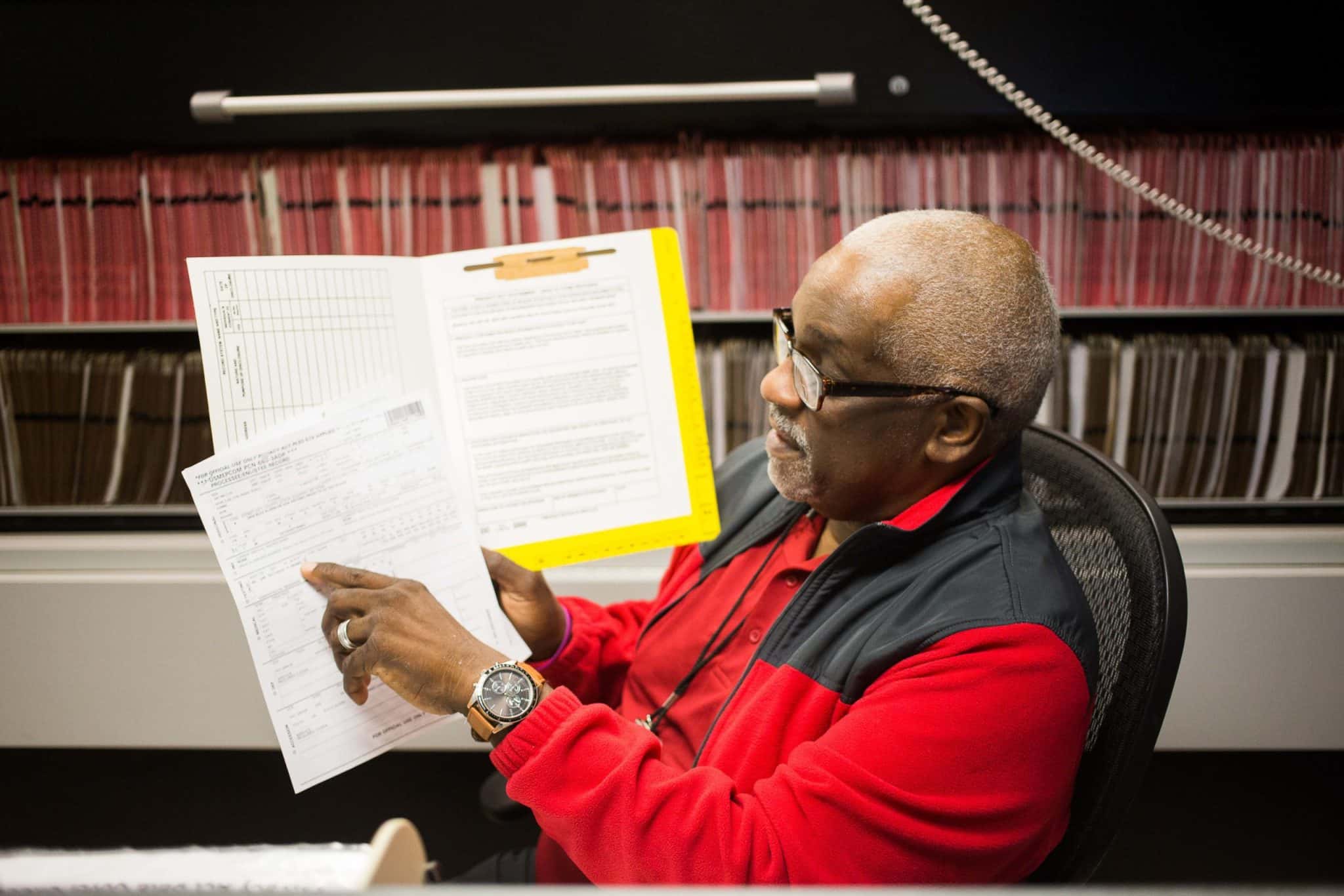
Before writing a single line of code, our product design and engineering teams conducted extensive fieldwork. We talked to field advisors from all three departments within MEPS stations across the United States. These are the people who sit with applicants every day, processing aptitude tests, medical results, background checks, and enlistment contracts. Their workflows, their frustrations, their workarounds for the old system's failings: all of it shaped what we built.
The research finding that mattered most? Field advisors didn't want something "modern." They wanted something that matched how they actually worked, using the acronyms, jargon, and mental models they'd developed over years. So that's what we built.
Requirements from a dozen stakeholders
Six branches of the armed services. Several external HR and medical organizations. Eleven integrations total, many with no APIs and wildly inconsistent test environments. Before putting hands on keys, we gathered and consolidated requirements from more than a dozen stakeholders into comprehensive, end-to-end specifications.
That consolidation process itself became valuable. By mapping every data flow and business rule into one place, we helped MEPCOM understand its own business logic more completely than it ever had before. Years of tribal knowledge, scattered across dozens of field offices, finally lived in a single source of truth.
Agile delivery with 60+ demos
MEPCOM had always operated on a waterfall process. Requirements up front, delivery at the end, and hope nothing changed in between. We introduced agile development, which for a government organization with this many stakeholders and this much regulatory complexity was no small shift.
Over three years, we completed roughly 60 demos, each one showing working software to stakeholders from across the military branches. Every integration, every user flow, every edge case in the contracting process got exercised in front of the people who'd use it. Feedback went directly into the next sprint. By the time we shipped, nobody was surprised by what they got.
Modern architecture replacing text files
The legacy system's integrations ran on text files. Not REST APIs. Not even SOAP. Text files. Each of the 11 external systems had its own format, its own quirks, and its own failure modes. We replaced the entire integration layer with a GraphQL API customized for MEPCOM's specific data needs. Consistent query patterns, typed schemas, and a single interface that all downstream systems talk through.
The front-end moved to React. The back-end to Ruby on Rails with PostgreSQL. The infrastructure to AWS. Every layer was chosen for long-term maintainability, not just initial delivery speed. MEPCOM's team can iterate on what we built without needing us in the room.
System integration architecture
MIRS 1.1 unifies all six military branches with the core MEPS processing functions and external HR, medical, verification, and congressional reporting systems through a single GraphQL API, replacing the legacy text-file integration layer.
A platform field advisors actually want to use.
The contracting process for military enlistment is complex enough that getting the user flow wrong means applicants can't legally process through. We couldn't simplify the complexity away. Instead, we made it legible.
Built around how advisors actually work
We preserved the acronyms, jargon, and mental models that field advisors had developed over years. The new interface mirrors their actual workflow, not an idealized version of it. When an advisor sits down at MIRS 1.1, they see a system that speaks their language and follows the sequence they're already trained to expect.
One portal, all applicant data
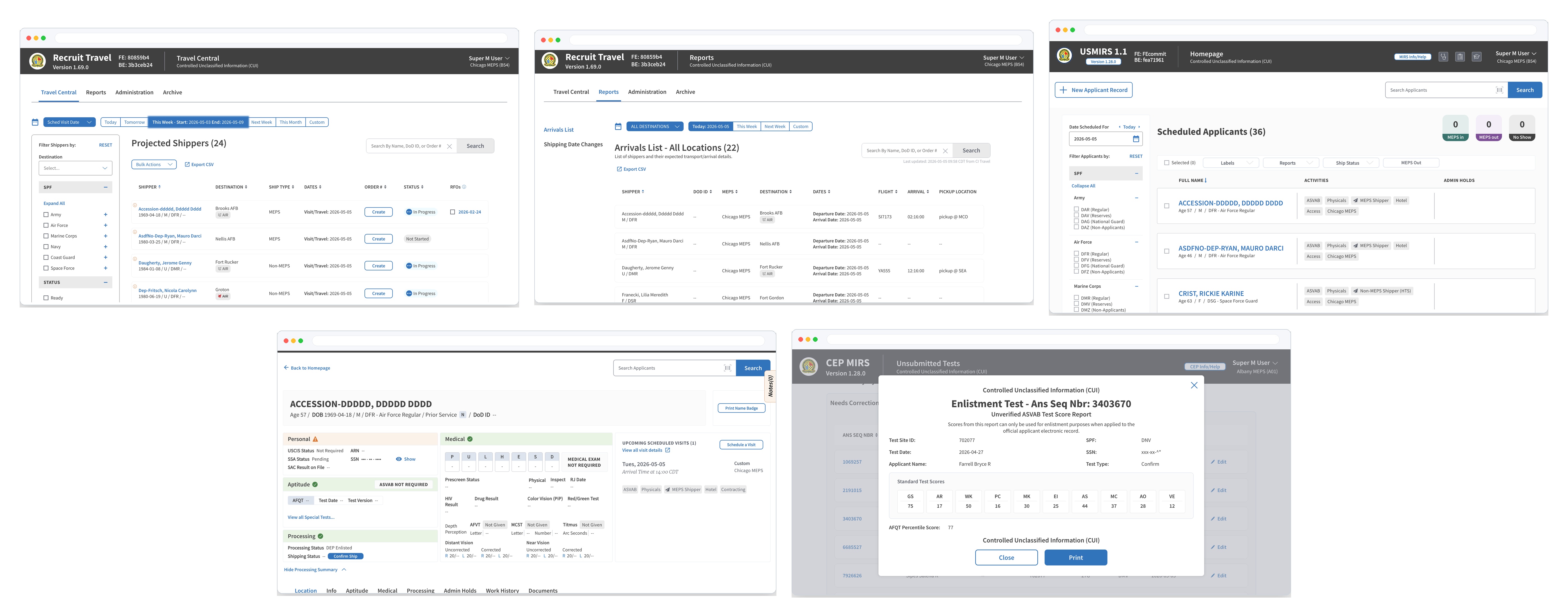
Under the old system, advisors logged into multiple portals to piece together an applicant's full picture. MIRS 1.1 consolidates everything into a single view: test scores, medical results, background checks, interview notes, and contracting status. One screen, one source of truth.
Multiple contracting paths, clearly mapped
Different branches contract applicants differently. Different circumstances require different paperwork and different approval chains. We mapped every path and built the UI to guide advisors through whichever flow applies, without hiding the complexity or requiring them to memorize which steps apply to which scenario.
The numbers tell one story. The morale shift tells a bigger one.
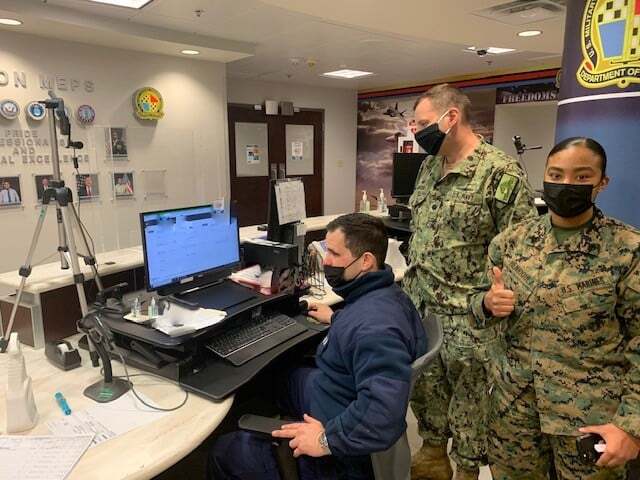
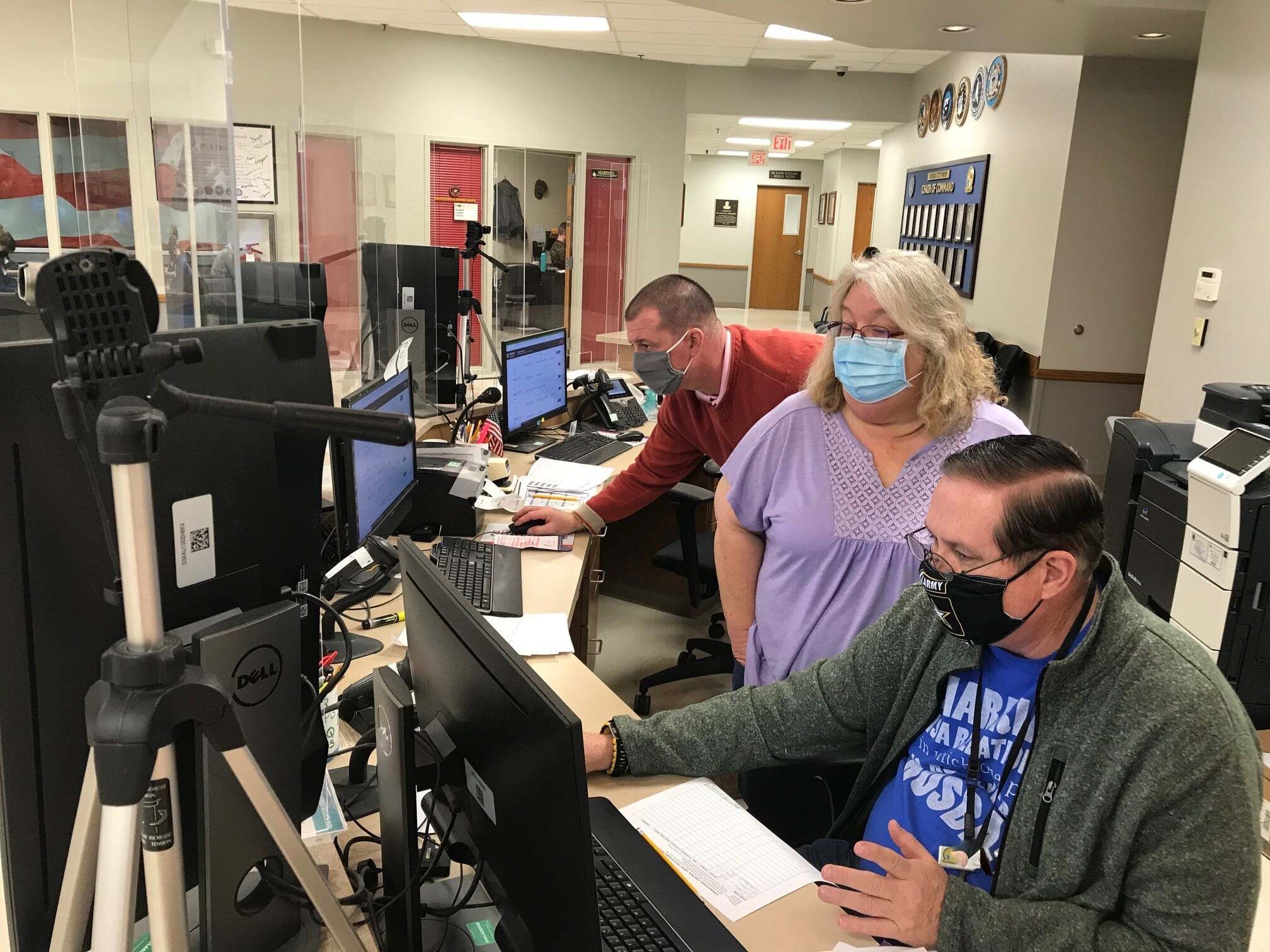
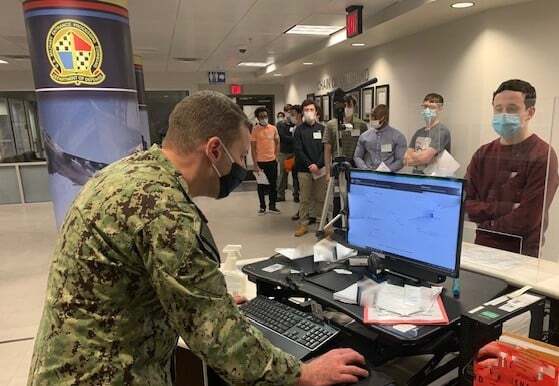
MIRS 1.1 is in production at 65 MEPS locations across the United States. It processes applicants for all six branches of the military, every day. Here's what changed.
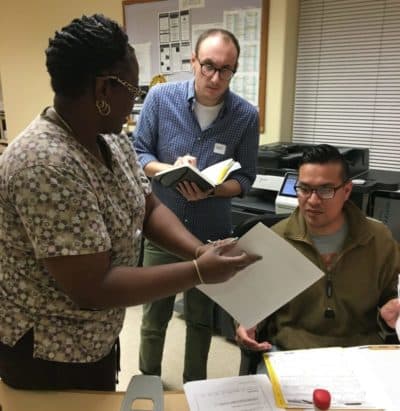
The metric that doesn't fit in a box: morale. Field advisors went from dreading their primary work tool to genuinely preferring it. The 200-page training manual got replaced by 20 short training videos. New employees become productive in days instead of months. MEPCOM's entire development approach shifted from waterfall to agile, a cultural transformation that will outlast the software itself.
We also transformed how MEPCOM handles iteration. With the new architecture, continuous improvement is built in. Changes that would have required months of coordination under the old system now ship in regular sprint cycles. The platform we delivered isn't just better today; it's built to keep getting better.
The work earned some hardware, too.
Gold Stevie Award
2024 American Business AwardsRecognized for the MEPCOM military enlistment modernization project serving all six branches of the U.S. military.

SIIA CODiE Award Finalist
Software & Information Industry AssociationRecognized for technical excellence on the MIRS enlistment platform.